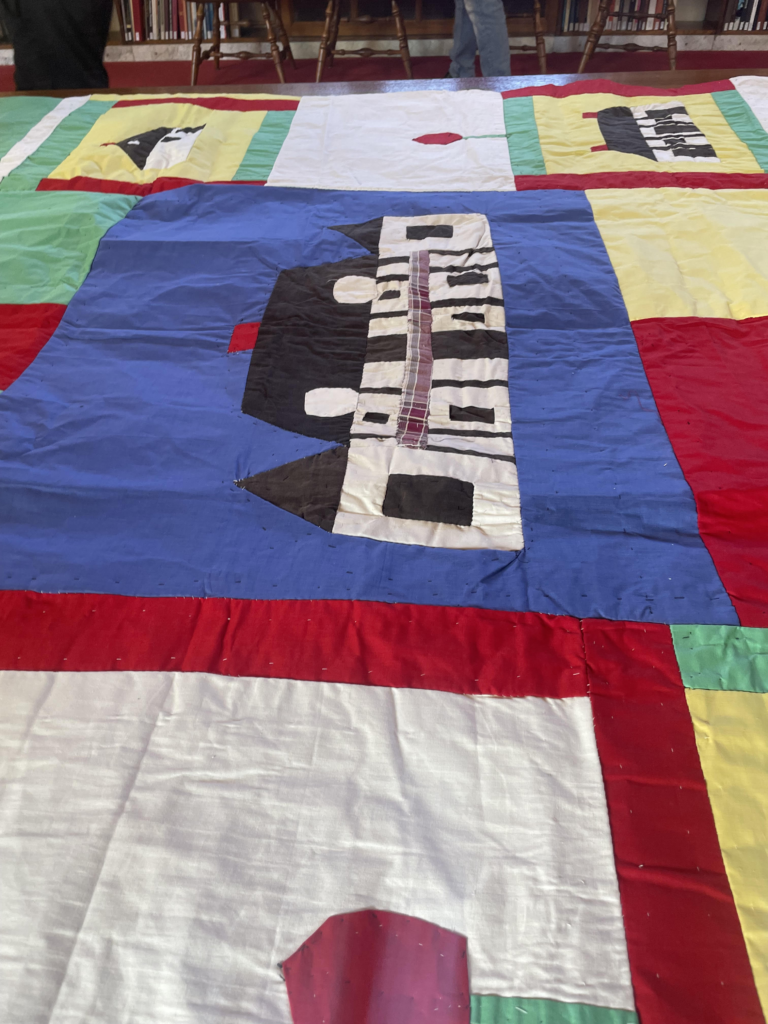
Clementine’s art style is simplistic, direct and has very bold color choices. I like how she is using vibrant colours to portray a plantation, a place that does not reflect a positive history for African Americans. Joseph mentioned that she did not buy any material to create this quilt, instead it was made with whatever was available to her. That was evident if you looked under the quilt and saw bags, sacks and what might have been pieces of cardboard? I am not sure but it looked so, and also the quilt was harder than the useable ones so it might have been because of that. This observation reminds me of our class reading, ‘Everyday use’ by Alice walker. Walker’s characters talk about the use versus preservation of such items, discussing whether it is more important for them to be appreciated through use, or kept away to be a token of black culture.
In conclusion the archive was a very useful part of my research, in particular because it helped me draw connections of the Black Arts movement to Knox college. It made me realize that the influence of the Black Arts went a lot further than Harlem. The fact that some figures have also visited/agreed to visit the college was surprising. I suppose a large part of that was through the efforts of Alfreda Dortch and A.B.L.E. I believe the archival research allowed a deeper appreciation of the efforts made by African American alumni to make Knox a more integrative and welcoming environment for black students. Just as we honor national Black Power and civil rights activists, the alums of Knox deserve some recognition for the impactful changes they initiated on a local scale.