In 1980, Alfreda Dortch Williams donated a book to Knox College called “Black at Carleton, 1966-1979”. Inside are interviews about the experiences of various Black students who attended Carleton College in Minnesota. At first, I wondered why she did this. However, there could be different reasons. One is the importance of sharing the struggles they experienced while going to schools in the Midwest. Williams explained in an interview that, while she was in A.B.L.E., members would travel across states to different Midwest colleges to understand and connect with other Black students.
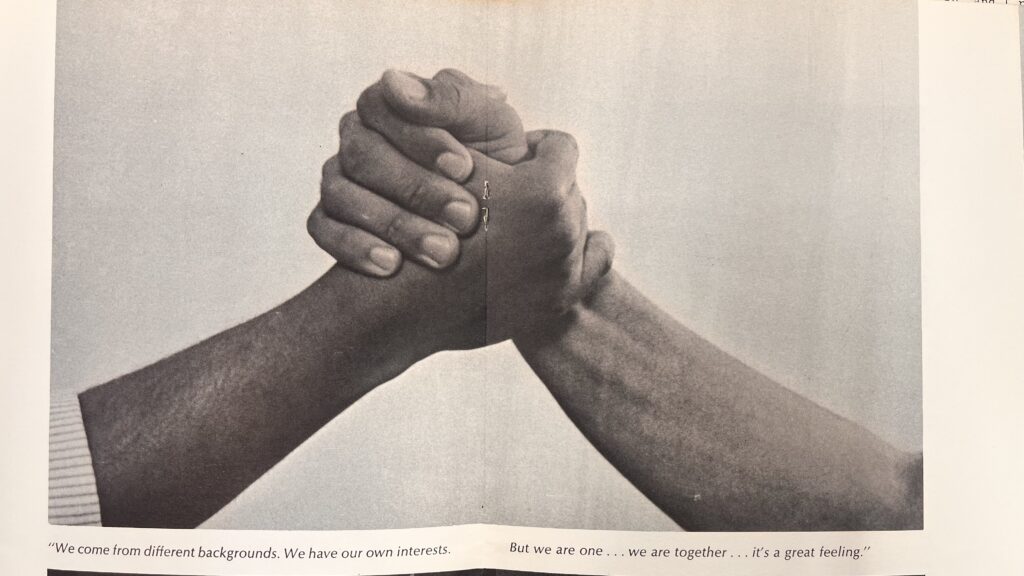
Above is a picture with hands shaking with a quote that reads, “We come from different backgrounds. We have our own interests. But we are one… we are together… it’s a great feeling.” At first glance, I thought this was a classic “Black-hand-shaking-a-White-hand-because-we’re-all-in-this-together-and-we-see-no-color!” photo, which would be corny and inappropriate in this context. Thankfully, it was not. These are two melanated hands; the quote explains that solidarity transcends differences. Their unity exists in the similarity that they share: their skin tone and how it affected their lives at Carleton College.
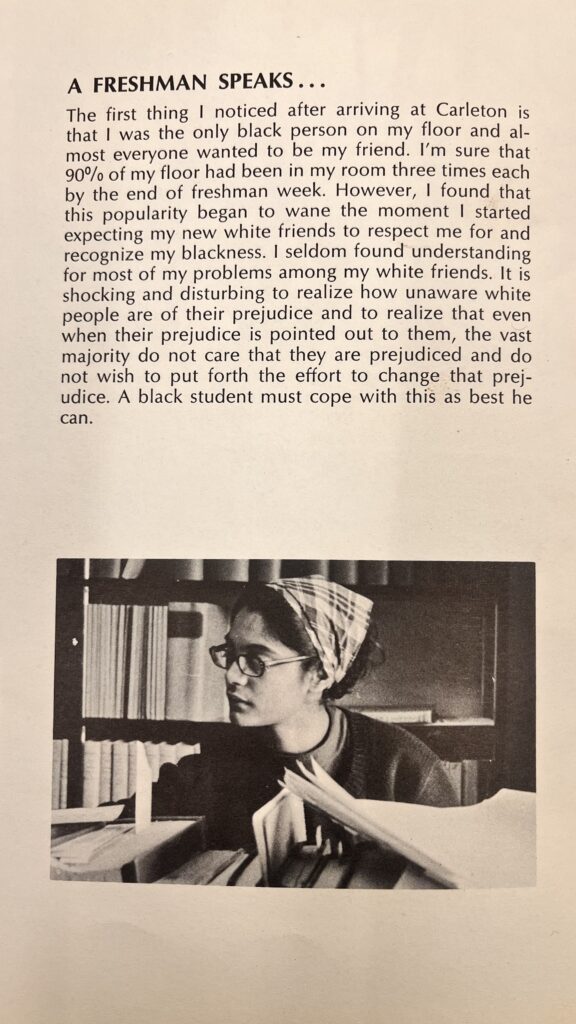
Above is an account from a freshman describing that when they first arrived as the only Black person on their floor, “almost everyone” wanted to be their friend. I raised my brow at both “almost” and “everyone”. “Almost” makes me wonder what occurred that made them feel that not everyone was interested in getting to know them. And them saying that “everyone” wanted to be their friend feels…token-y on the white person’s part. Later, they explain that the white students weren’t interested in exploring their prejudices and making changes to improve their Black friend’s experience on campus.
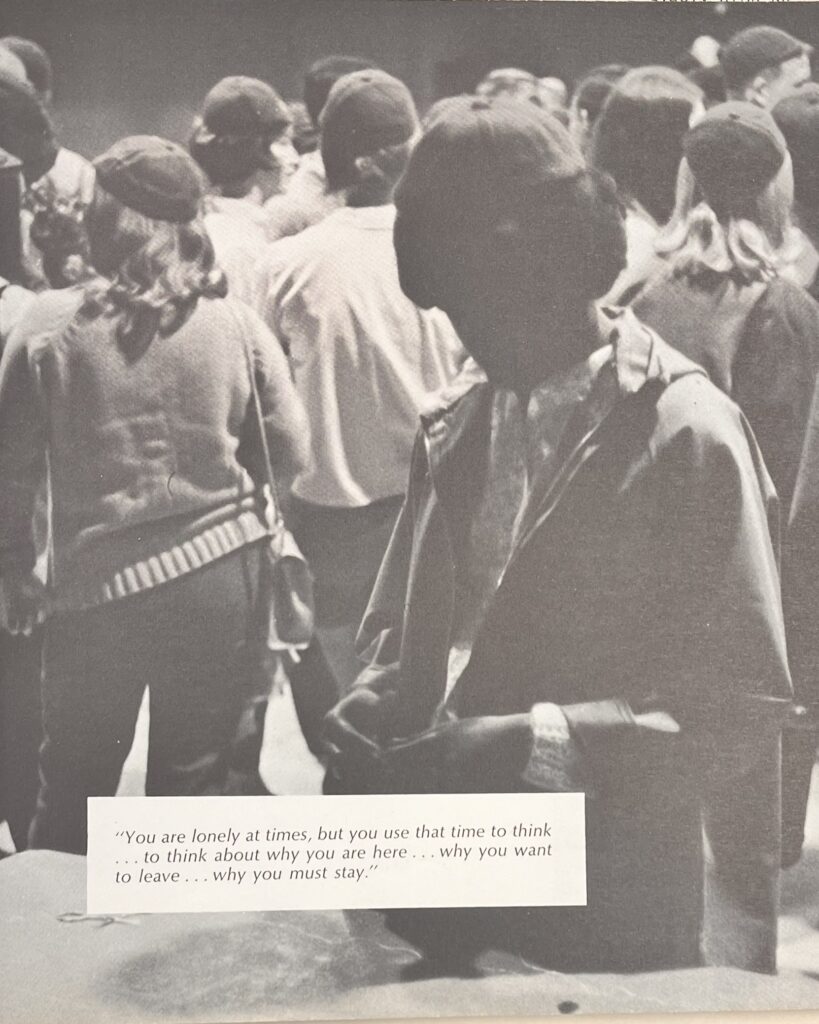
This quote is likely something that most lonely college students have had to tell themselves to convince themselves to stay, but remembering why you’re enduring the hardships you’re enduring holds a lot of value for a person in this specific situation.
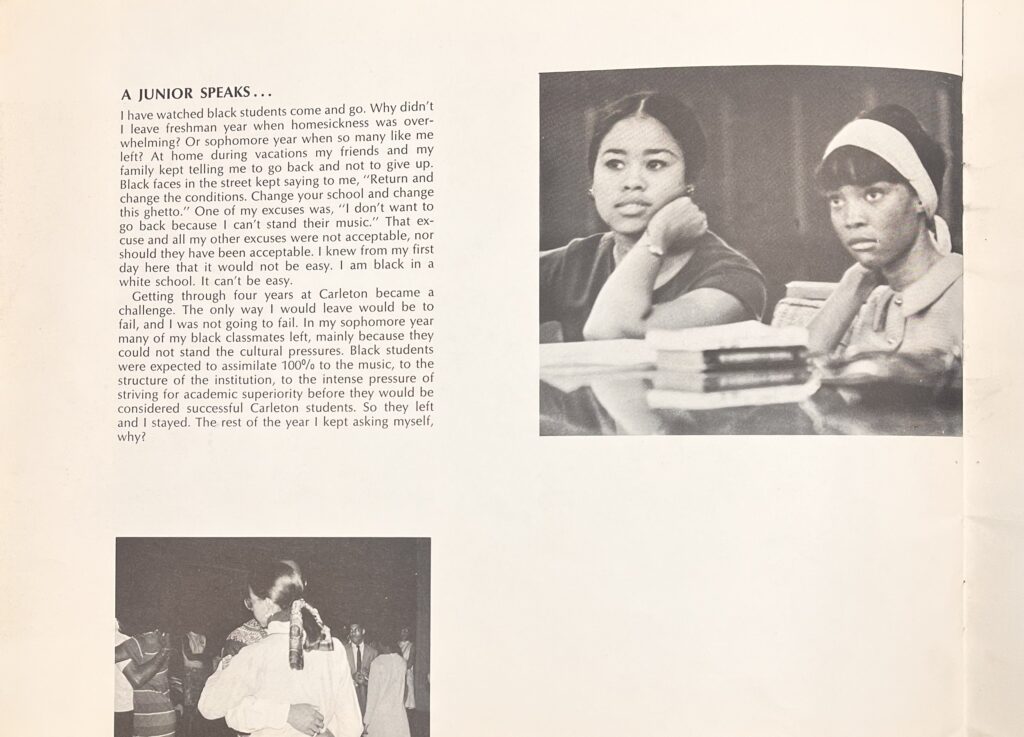
This junior explains the reason they stayed. When living in a country where you‘re told that education can help you change the slums you came from, it feels almost selfish to leave because of “a little racism” and “a bit of depression” and “some exclusion”. You feel that you’re representing something bigger than yourself. It’s easy to lose your sense of individuality and see yourself as your hood or country or family. Dissociating their feelings from their overall experience might’ve been a coping mechanism. This mindset is the reason I’m still here, a mindset from a Black person going college at least 40 years later.