A.B.L.E.’s Ten Demands
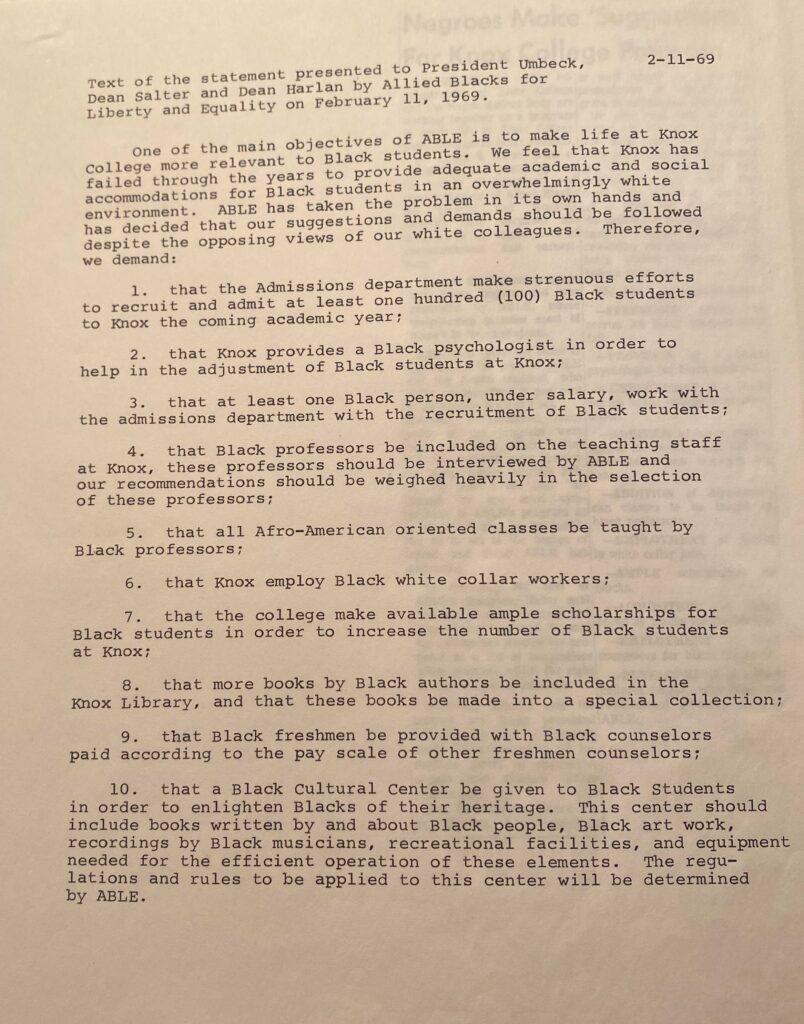
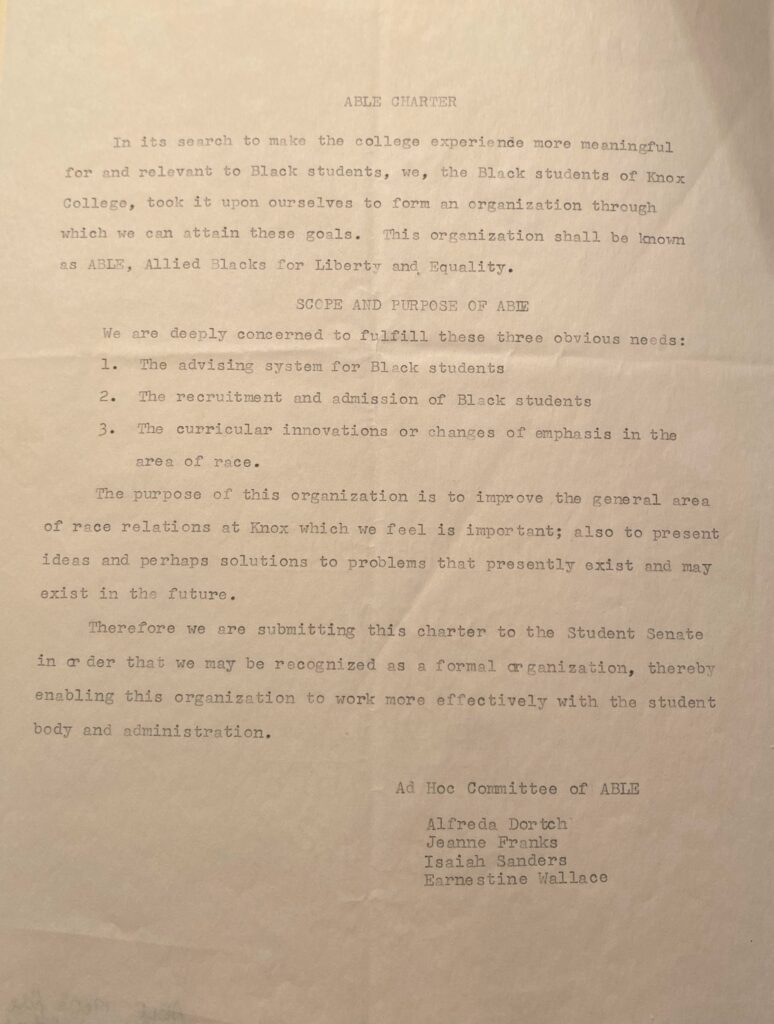
Allied Blacks for Liberty and Equality (later known as A.B.L.E.) made ten demands on February 11, 1969. Most of the 20-something black students on campus at the time were part of A.B.L.E., and they made their grievances known to Knox staff. Their list of demands consisted of simple asks like requesting more black authors in the library, that there should be more black staff at the school, and that the department tries to enroll at least one hundred black students in the coming year. These demands were not responded to very kindly, but seem to me very manageable for the school to achieve (had they wanted to). Most of these demands are now a reality at Knox college, but still not all of them. I would be very curious to know if A.B.L.E. still agrees with these ideas now, and if they’re still pushing for any of these changes that have not yet been implemented. Personally, I think that the above letter was very to the point, but remained respectful and polite considering the discrimination that black students were being faced with at the time. The demands show the spirit of the Black Power and Civil Rights Movements at the time, and the energy that students were taking to fight for their rights on campus and everywhere.
Knox’s Response to A.B.L.E.’s demands
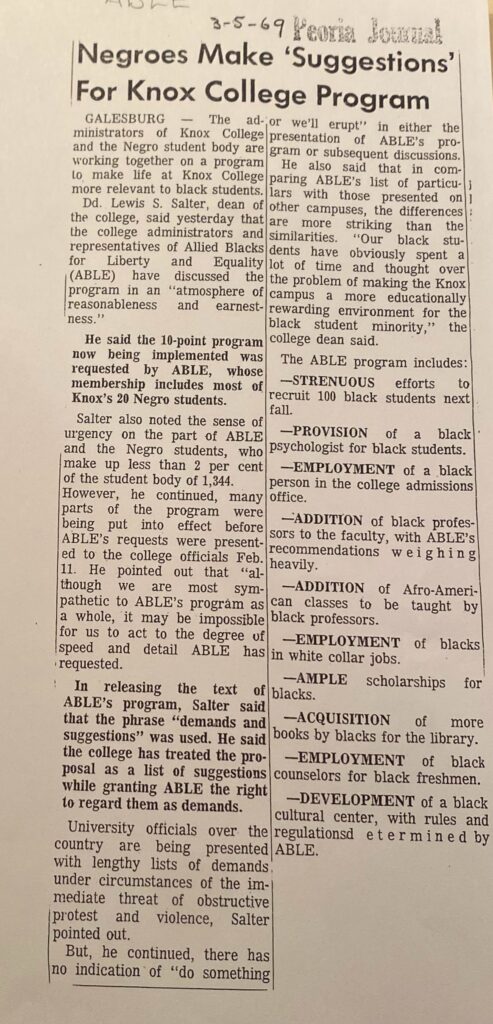
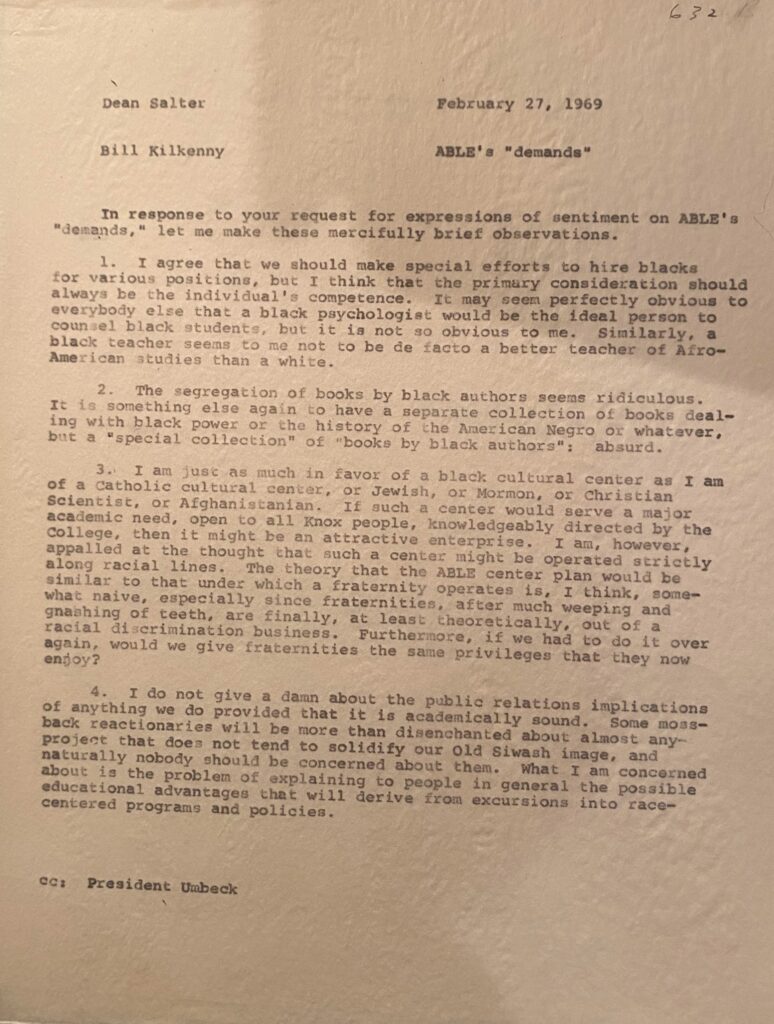
The response to the demands made my A.B.L.E. shocked me greatly. I knew the times were turbulent, but to think that the Dean and community would ever speak about students in the way they did, even behind closed doors, makes me extremely uncomfortable. The newspaper published takes a more objective stance to the issue of A.B.L.E.’s demands, but only interviews the Dean at the time (Lewis S. Salter) and not any of the students. In this newspaper article, Salter says that the school isn’t viewing the list of demands as demands, but instead as “suggestions” from A.B.L.E. He also points out how many schools have had issues with demands being presented with threat of violence or protest, even though he says it’s clear that’s not what A.B.L.E. intended. The way these demands are being treated by white authority reminds me of the major BLM movement that took place after George Floyd was murdered by police in 2020. Newspapers ran articles that mentioned violence and riots, even when covering stories of fully peaceful protest. The response to the demands of concerned and disillusioned black students all the way back in 1969 played out exactly the way it did years later in 2020. It became all the more apparent to me upon reading these documents that social change has occurred for oppressed groups (specifically people of color), but not nearly enough. The Dean’s internal letter was even more jarring to me than the published article. He firstly calls A.B.L.E.’s demands, quote on quote demands and complains multiple times about how these changes take time and cannot happen overnight (as he does in the newspaper article as well). He uses words like “ridiculous” and “absurd”, as well as saying some of the points presented point out obvious issues that “not so obvious to me” and says “I do not give a damn”. I know this was an internal letter, yet even so the language and passive-aggressiveness of it gives me pause and is something to consider when considering the history of Knox College.
Peace March/Day of Consciousness
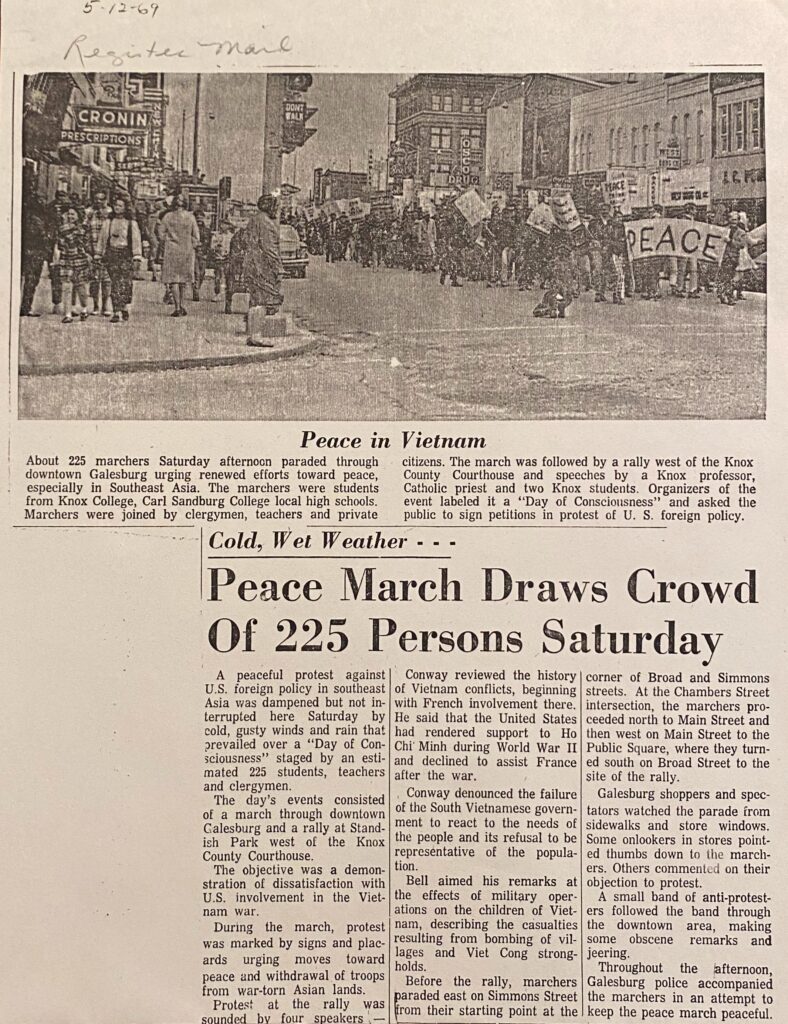
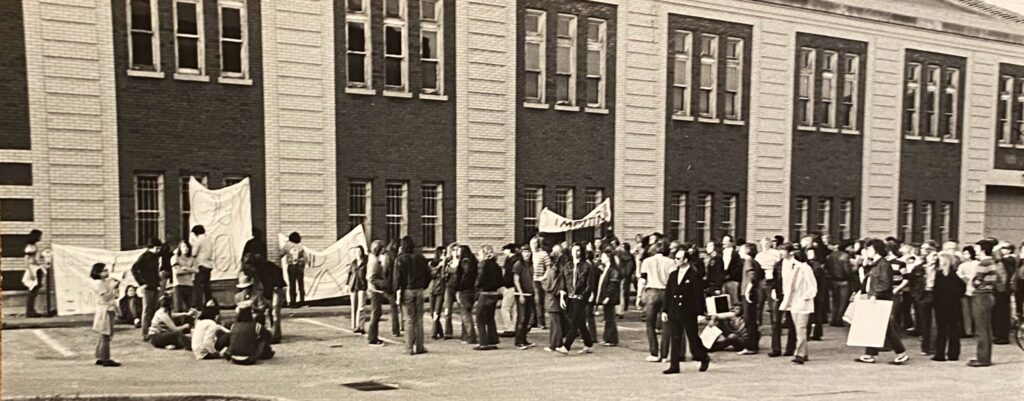
Knox students, teachers, and clergyman held a “Day of Consciousness” event in May 1972 that was a march through downtown Galesburg, ending with a rally outside the County Courthouse. Roughly 225 people were in attendance, made up of Knox students, Knox teachers, Carl Sandburg College students, local high school students, clergyman, and citizens. This march was to protest the Vietnam War and America’s militaristic imperialism in foreign affairs. The rally at the County Courthouse included speeches from two Knox students, one Knox professor, and one priest. I think the pour-out from the community at the time is fascinating, especially as we compare it to the Black Power Movement at the time. People weren’t pouring into Galesburg to protest all the things that A.B.L.E. was trying to bring attention to. While I respect this act of protest (as I respect all acts of protest) and I agree the Vietnam War was a bad thing, most people at the time did agree with the sentiments of this protest. And I think that’s exactly the reason that so many people joined this rally in Galesburg and at Knox, and not ones relating to the heavily controversial takes of the Black Power Movement.
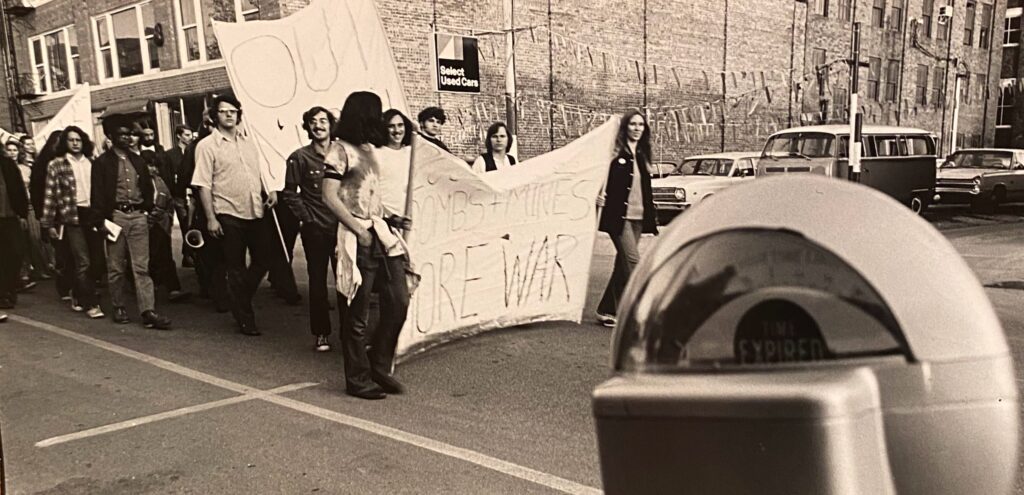
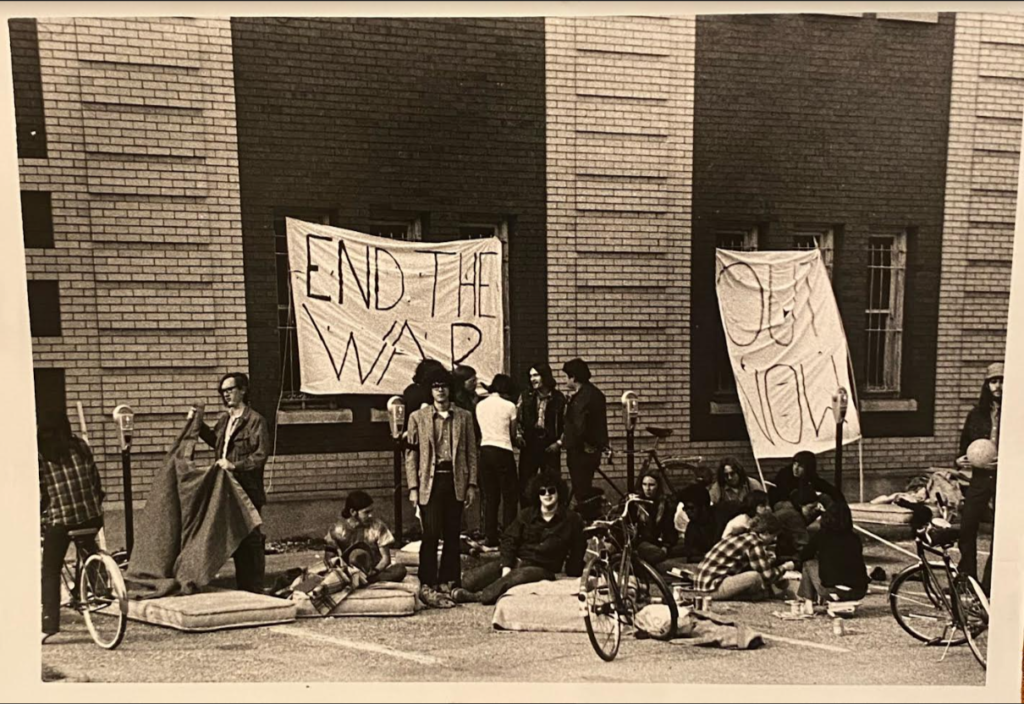
I love this picture so much and I don’t know why. The giant “End the war” poster and the mattress set up, the bikes and people milling about. The one student who is standing up, looking directly at the camera feels very haunting to me. He looks so done, just so disappointed with everything, which was a common feeling among youth at the time.
Fun at Knox Part II
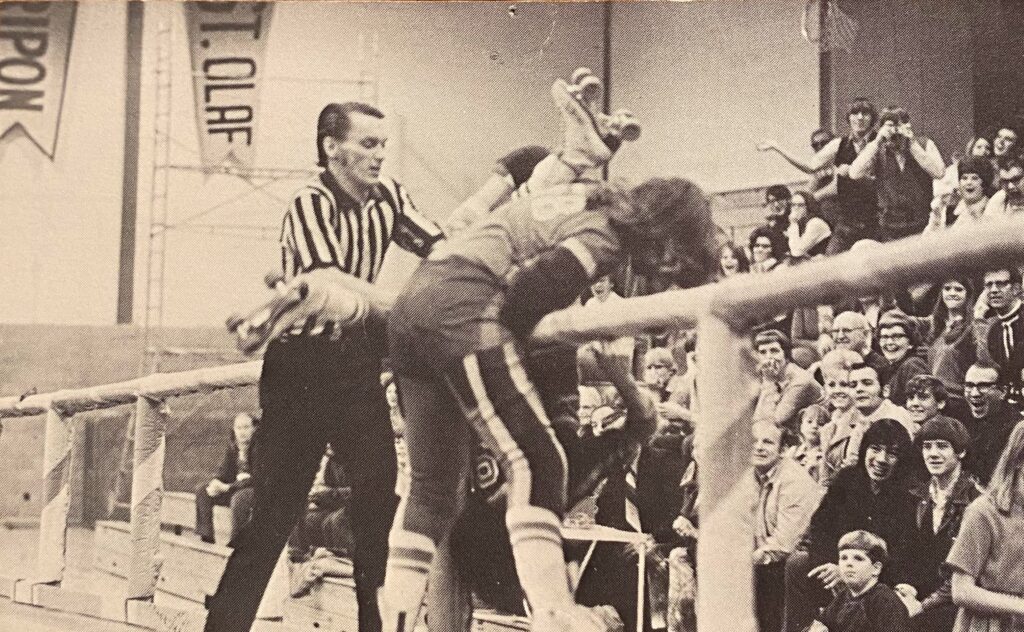
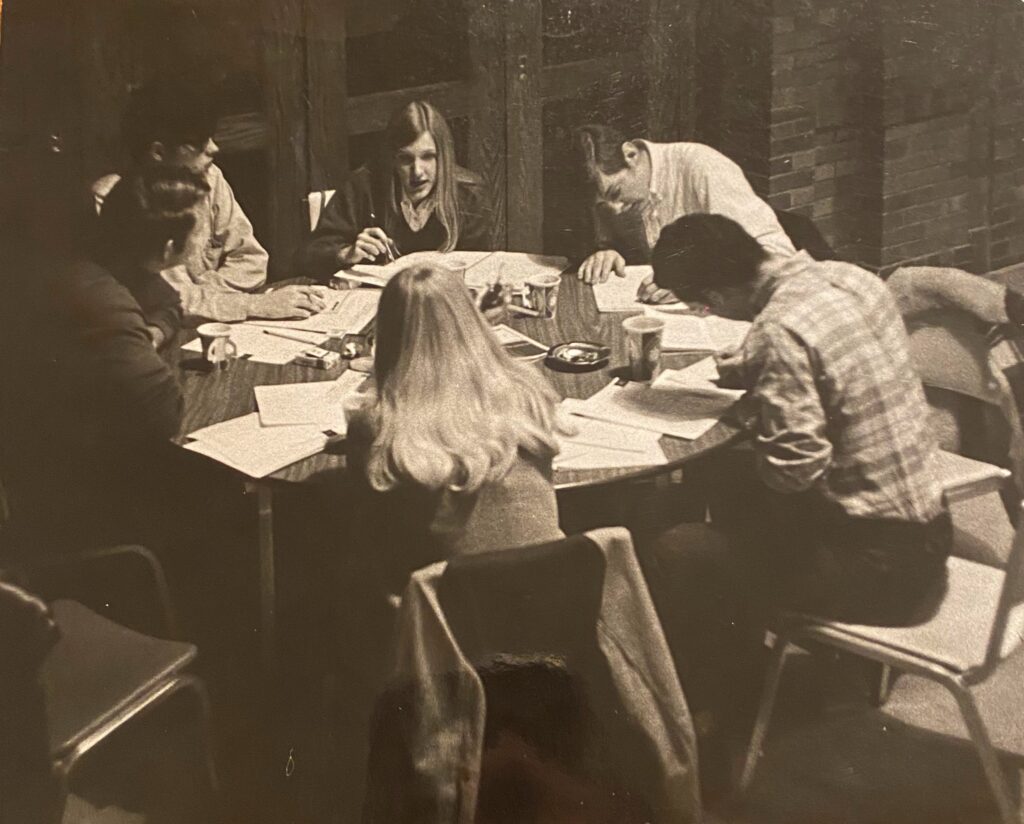
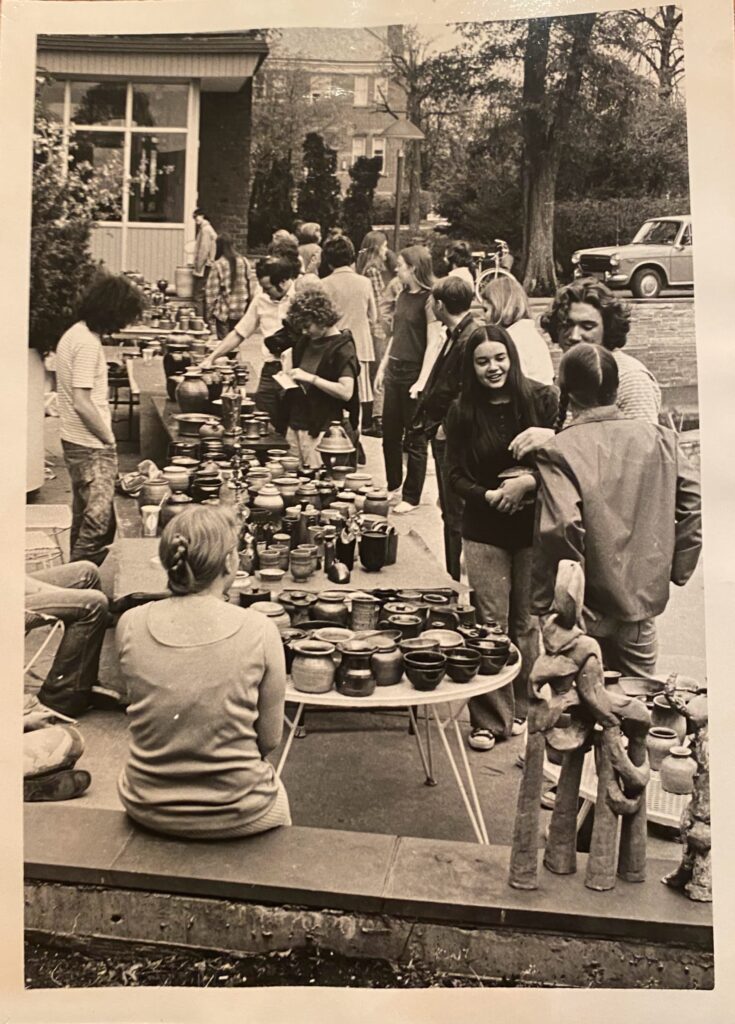
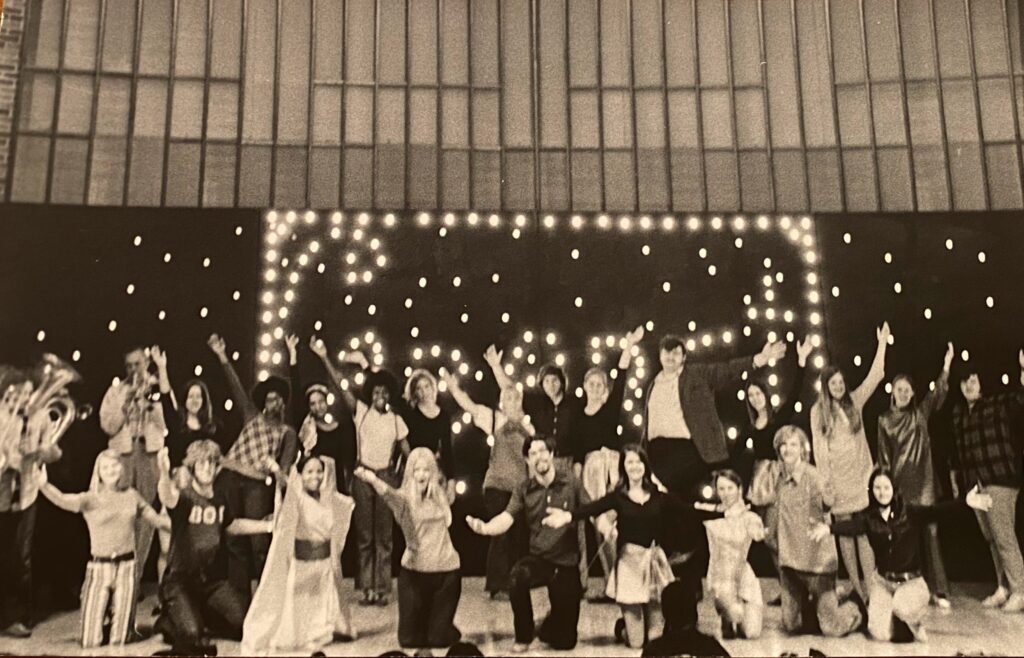
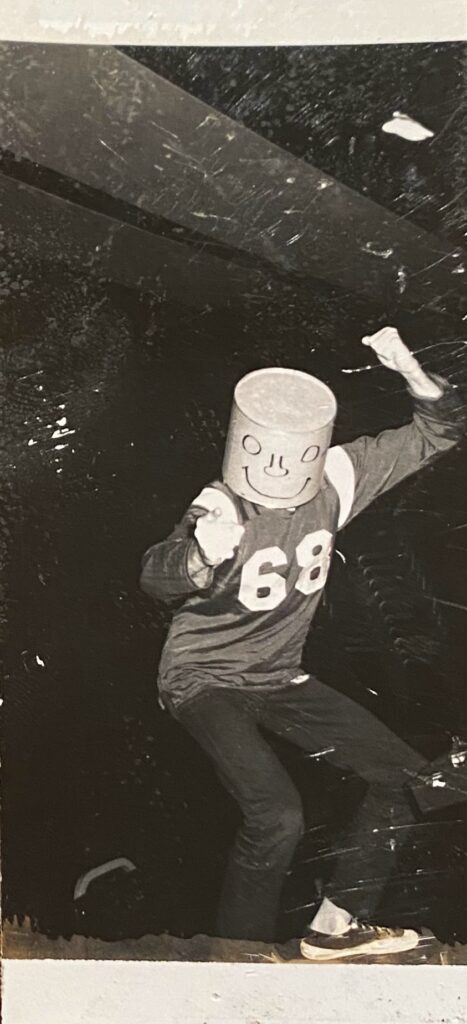
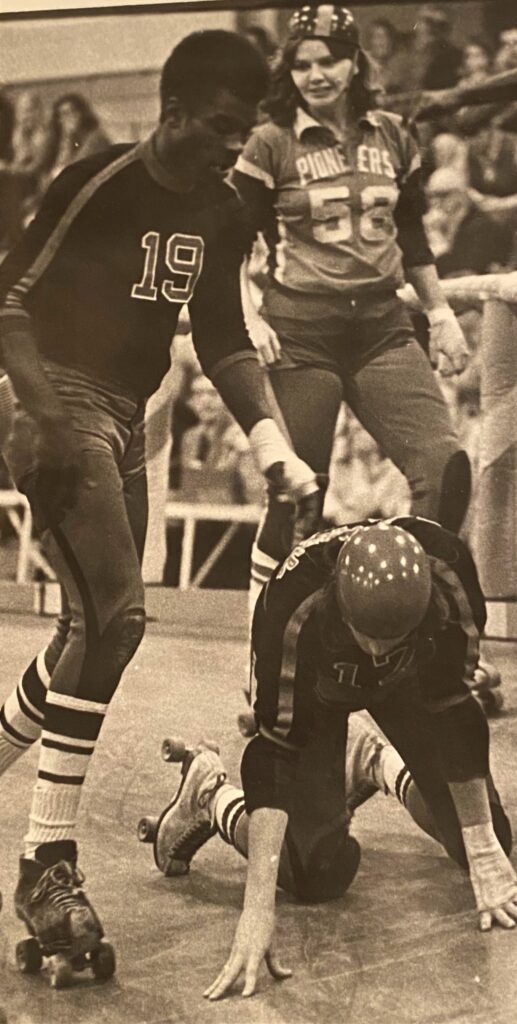
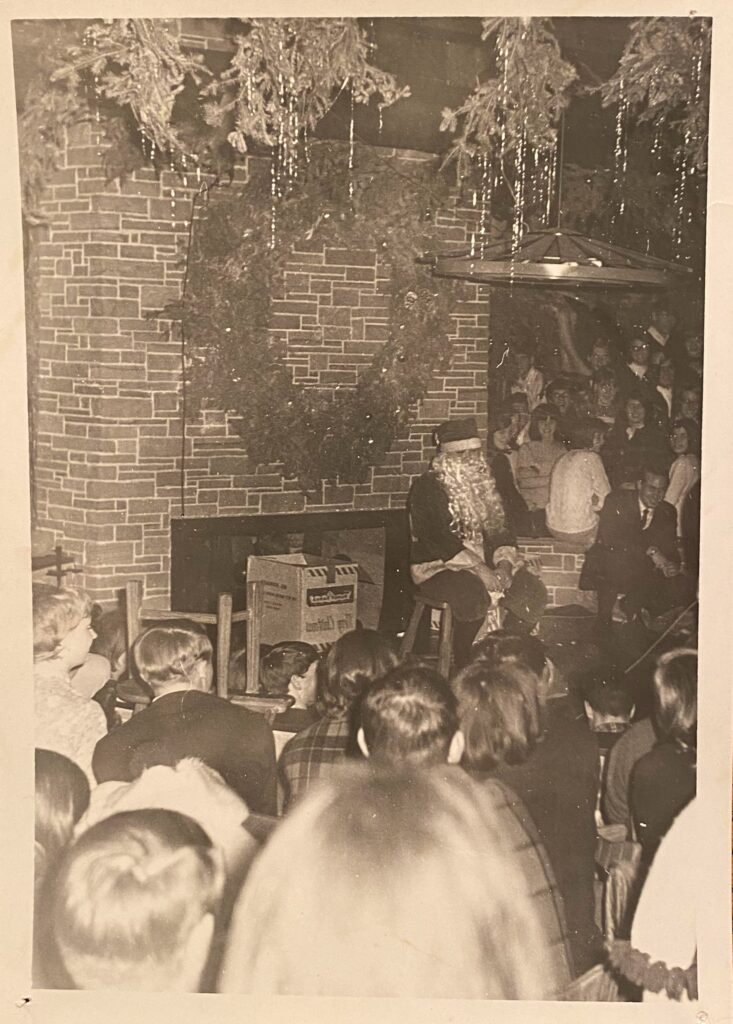
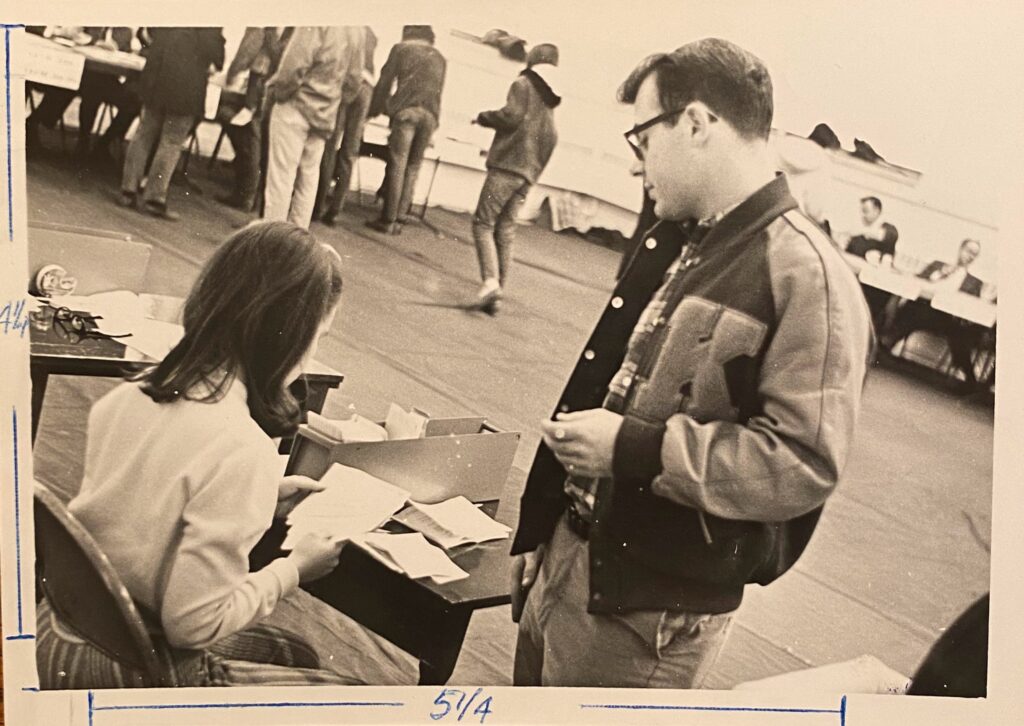
Just to add a little break to the heaviness of the previous discussions, here are some more entertaining and cool pictures I found while researching through the archives. The pictures are from 1966-1972, showing many day-to-day activities students were partaking in as well as fun events that took place on campus. Knox apparently held a roller derby (which seems insane now) and a Talent Show, both things I have never even heard mentioned before! I believe that after taking about such heavy topics and big events that happened at Knox, remembering viewer smaller moments of student life is important. These pictures, again, mostly include white students because the majority of Knox was white. It’s important to remember that A.B.L.E. was founded in 1969, and was working to make changes across campus even as students were living out their everyday lives like normal.
Excellent work, Tyler. You’re going above and beyond! The image of the Dean’s response to ABLE’s demands isn’t working. Can you fix that?
It looks like it’s working on my end but I will edit the article and replace the picture to try it out.