Clementine Hunter
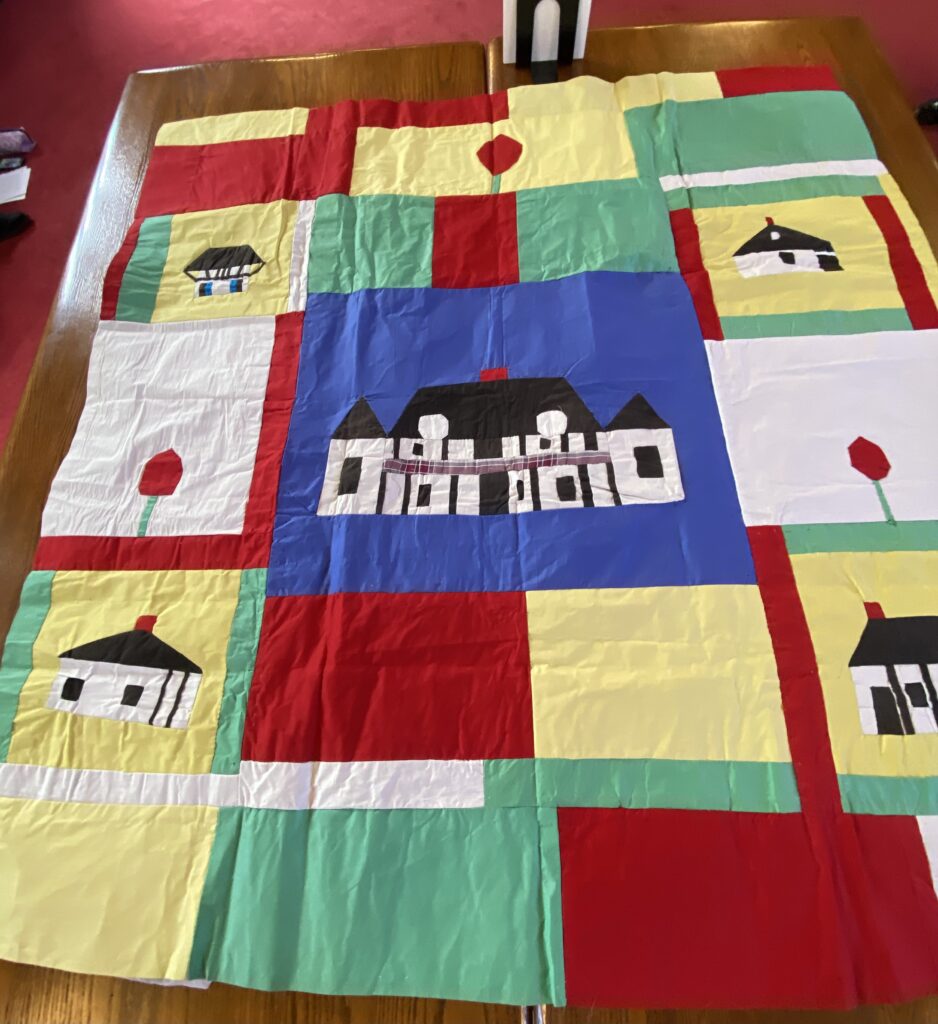
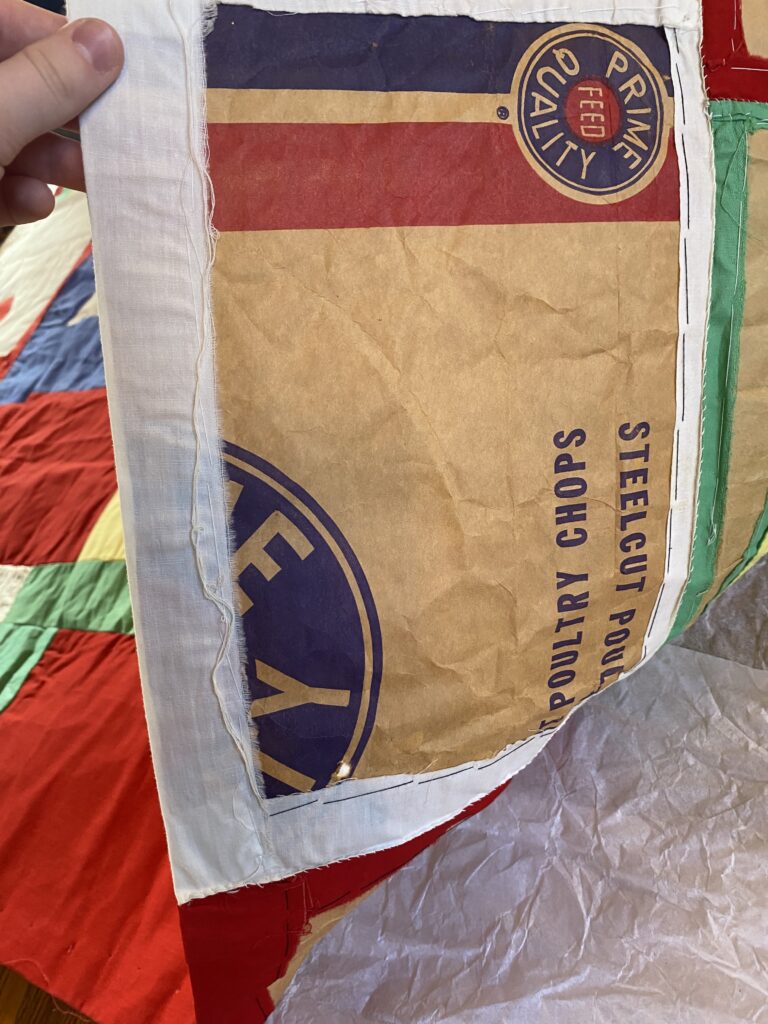
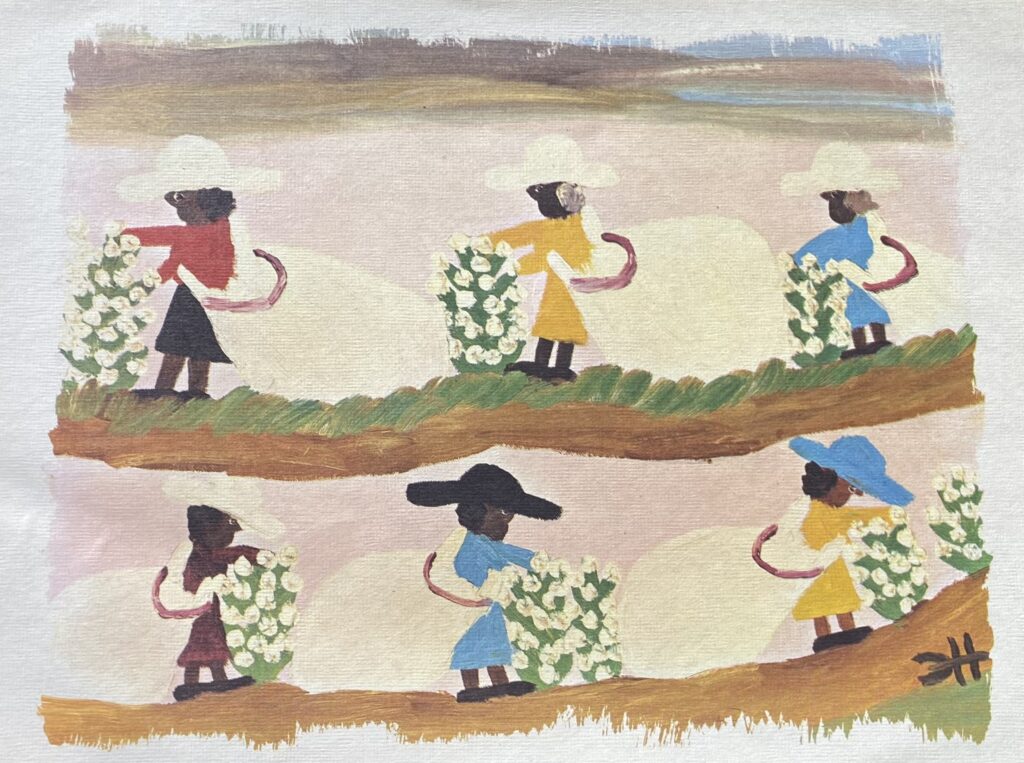
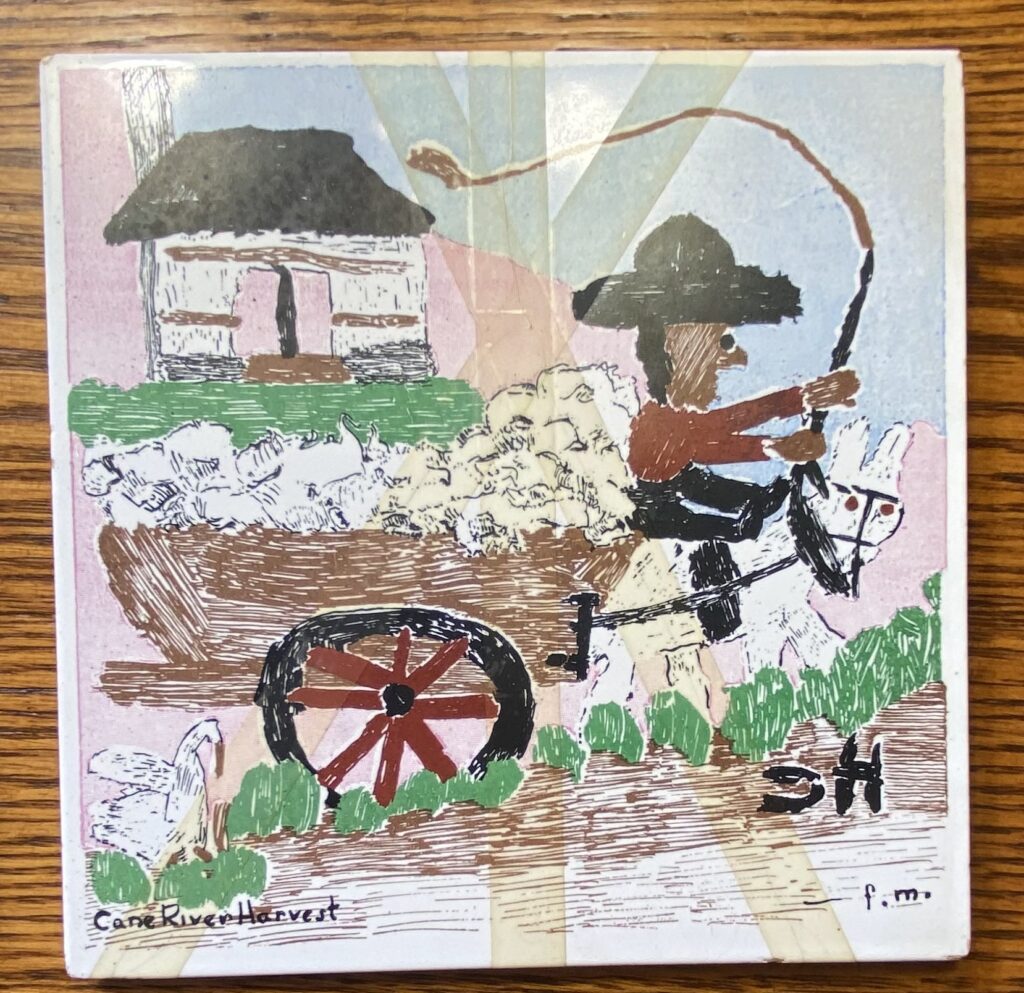
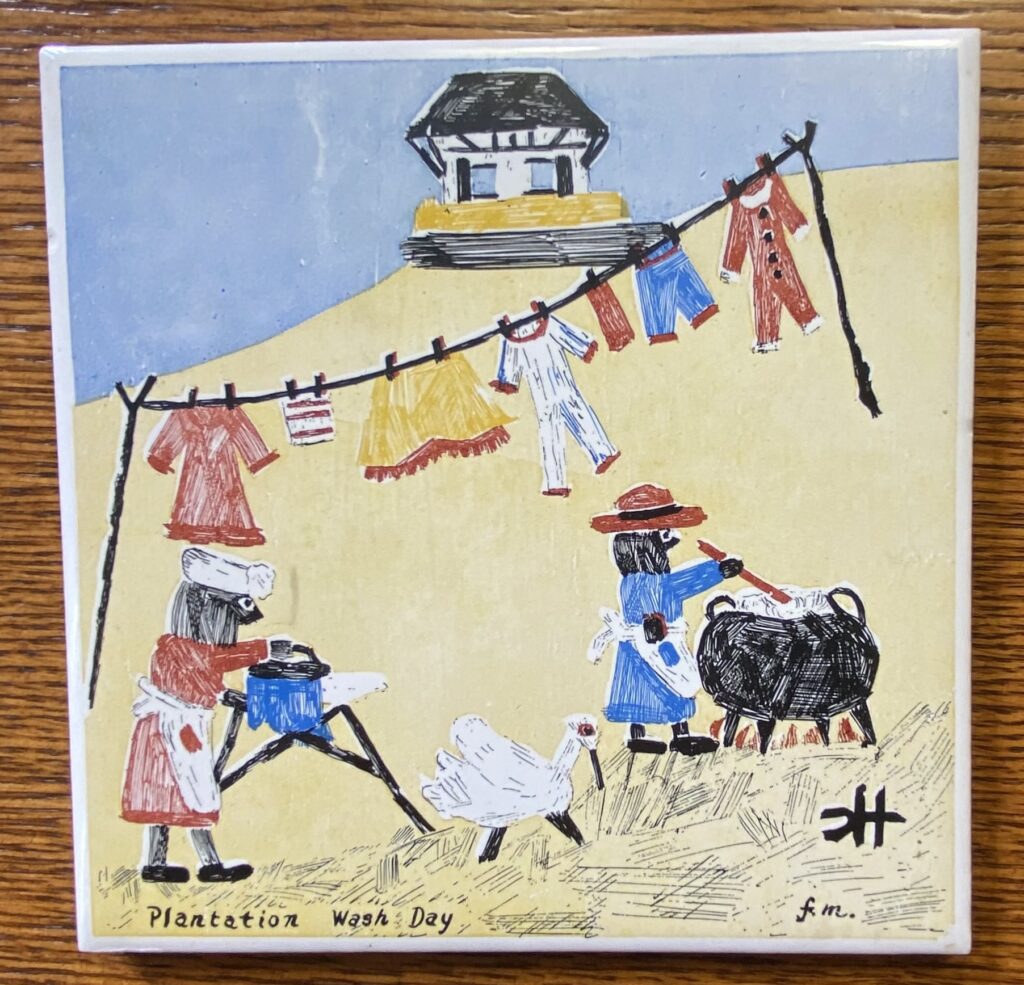
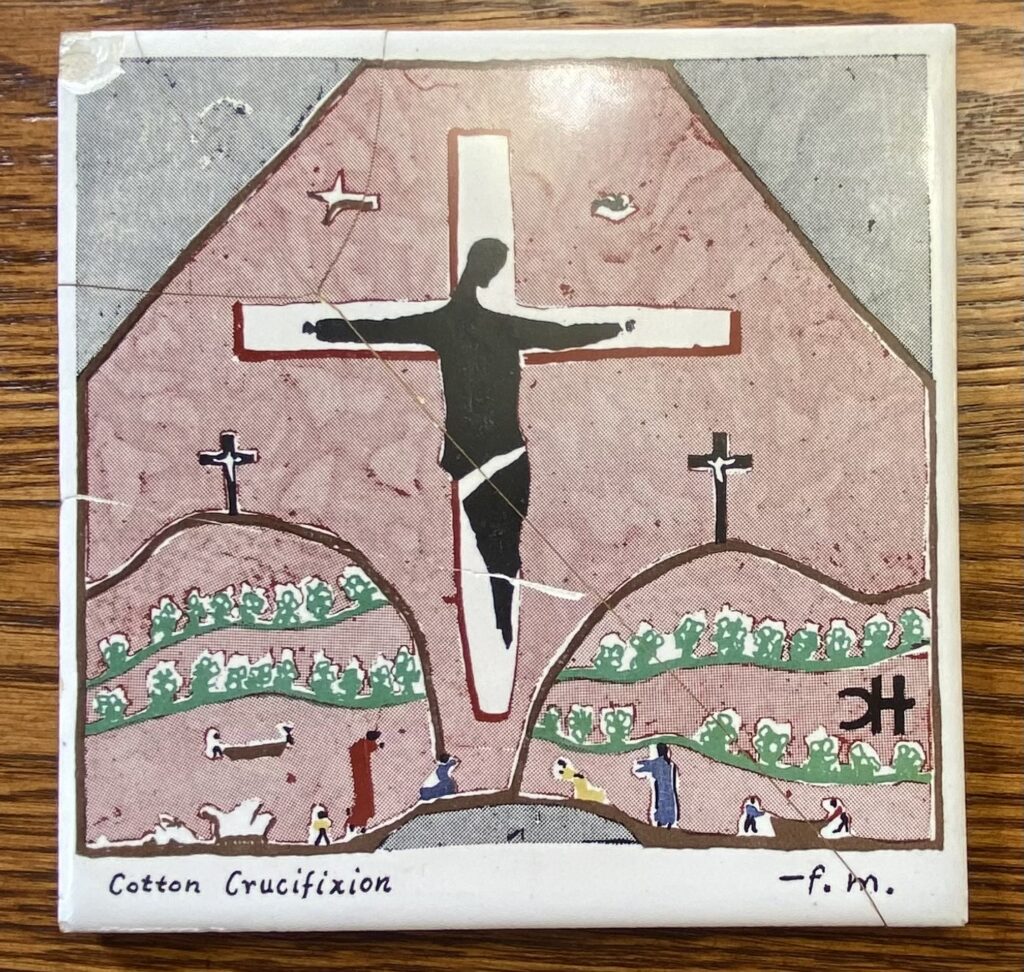
Clementine Hunter was a plantation worker born in 1886. She spent most of her life working on the Melrose Plantation in Louisiana as a field-laborer but also found solace through art. This above quilt is titled “Melrose Plantation” and depicts some of the buildings of the plantation. She uses her art, even through quilting, to tell her life story and the stories of black Americans at the time. She also did many paintings depicting the everyday lives of the laborers in the fields (most, or all being black at the time). Her paintings show picking cotton on the Melrose Plantation, harvests at the Cane River, clothes being washed, and other activities. Hunter didn’t have any formal training but still managed to turn to art to express her own life and the lives of those around her. The back of the Melrose Plantation quilt had backings of brown paper bags, including those that used to hold poultry chops. You can see the dedication she put into making her art, using any materials that she could get her hands on. Hunter rose above the norms of the time and followed her calling as an artist, something that not many black women could pursue in the 1800s. Her artwork shows us the same spirit and determination of the Black Arts Movement of the 1960s and 70s, of black people creating new forms of art unique to themselves and their cultures to express their unique experiences. These quilts remind me of Alice Walker’s “In Search of Our Mothers’ Gardens” and the limited opportunities for black people and especially black women. This art work was seen in gardening, and singing, and quilting. It’s truly incredible that this quilt not only survived, but is owned by Knox. Clementine Hunter did not have a “garden” (as Walker might put it) that had to be searched for; she was lucky enough to have her work not only credited to her, but credited to her by name. We need to discover more gardens, to always be in search of the art that is in our everyday lives.
Flunk Day at Knox
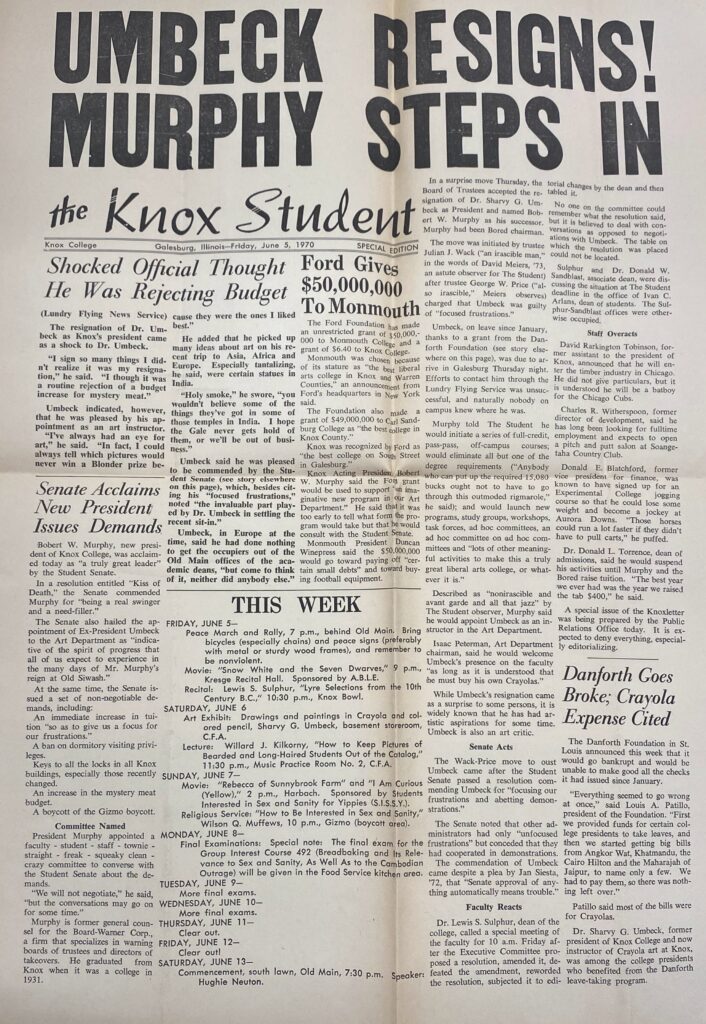
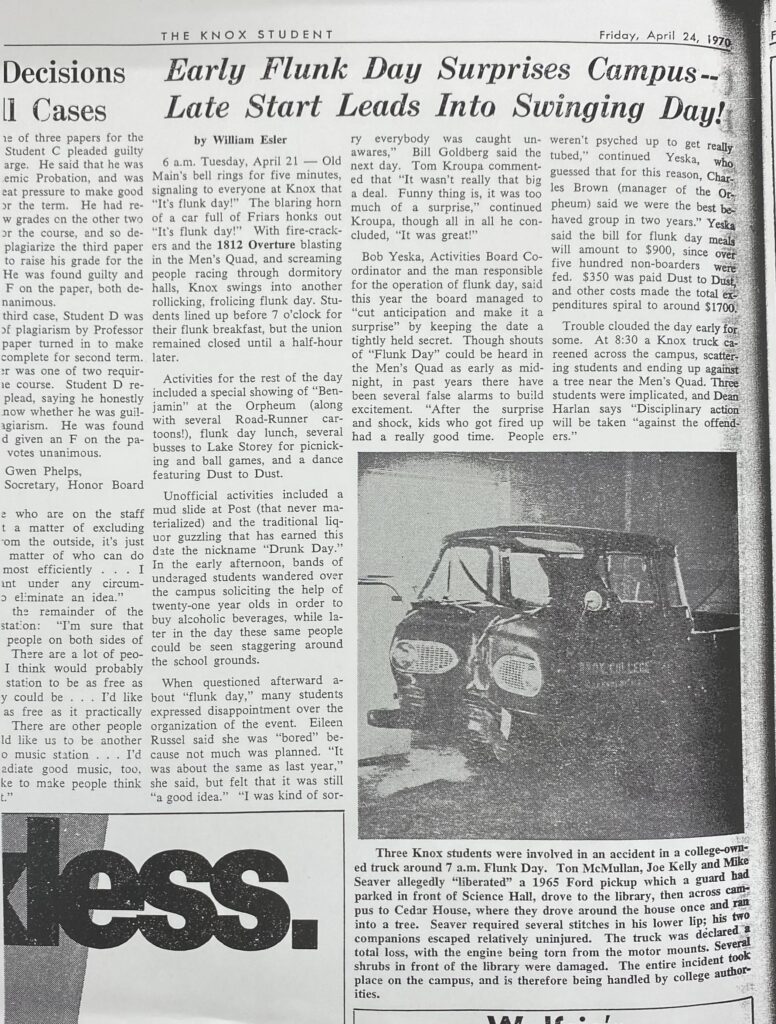
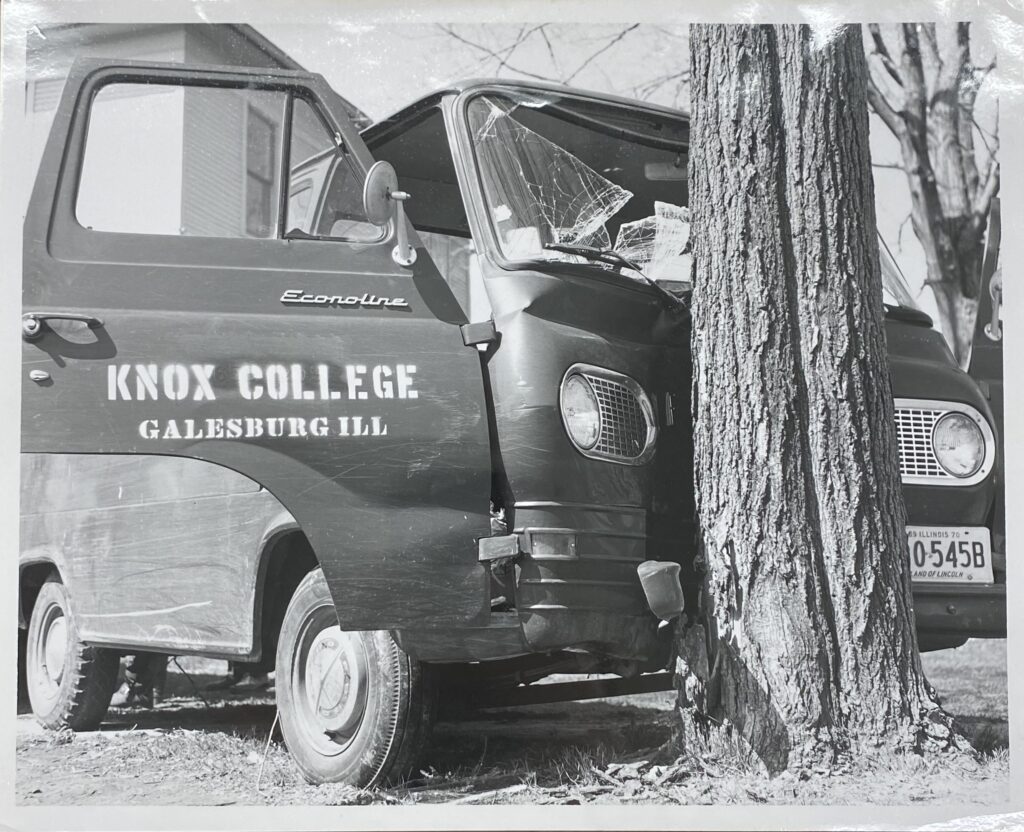
Some of the events on Knox’s campus in 1970 are so hilarious to me. Firstly, one of the highlights (or possibly the worst part) of Flunk Day was the car crash that occurred. Above is an article about it from The Knox Student and a picture of the crash scene. On April 21 (Flunk Day) 1970, three students “liberated” a Knox truck that was parked outside the Science Hall which they drove to the library and then across campus until they hit a tree. Only the driver, Mike Seaver needed any medical care (a few stitches in his lip) and the two passengers were uninjured, according to the article. The truck was totaled because the engine was destroyed in the crash and disciplinary action was taken against the students. This is the crazy activities that I expect to see on Flunk Day. I am not condoning this behavior at all, but I can’t help but find the incident slightly hilarious. The fact that the article uses the wording of “liberated” and right before they talk about this event they call Flunk Day “Drunk Day” just makes it so comedic. The other flunk day archive from 1970 was a fake issue of the Knox Paper, with the headline being that Umbeck had resigned because he accidentally signed his resignation instead of more budget cuts. The date on the paper is June 5, 1970, but April 21 was Flunk Day in 1970. So although The Knox Student edition was in the Flunk Day archive, it most likely is not from Flunk Day. Even so, it’s obviously a joke edition and is worth a read. It’s nice to see that students still engaged in Flunk Day and that the tradition has years of history behind it.
Miscellaneous Knox Activities
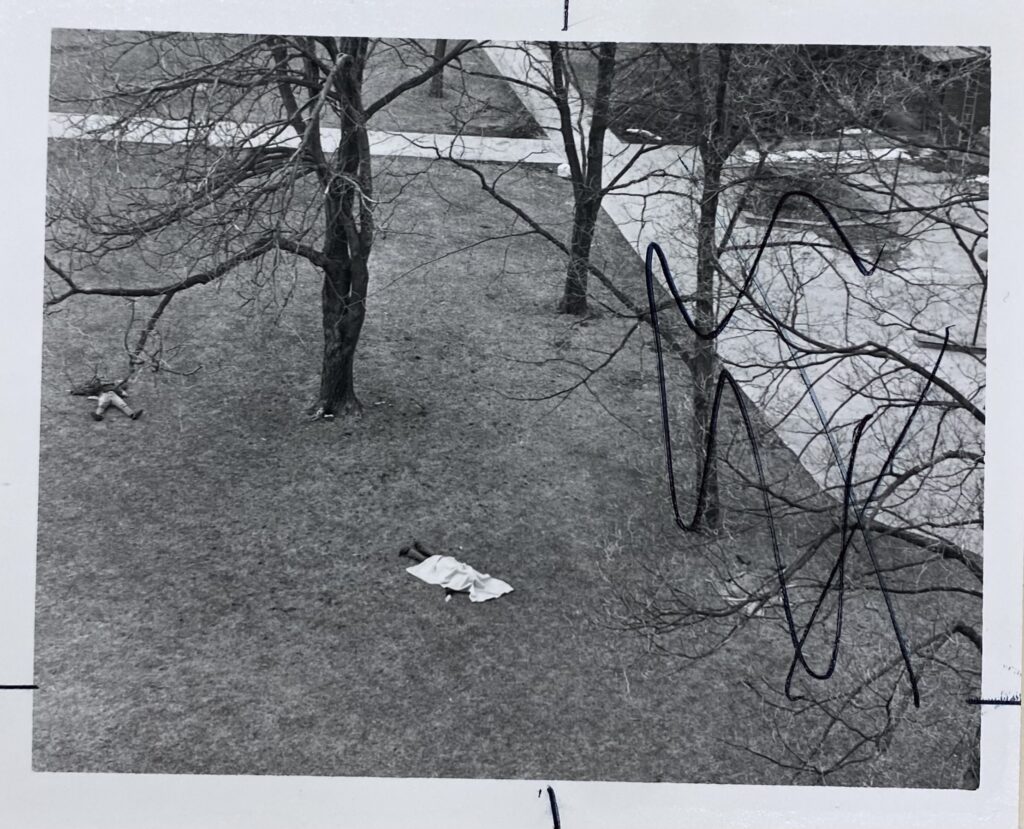
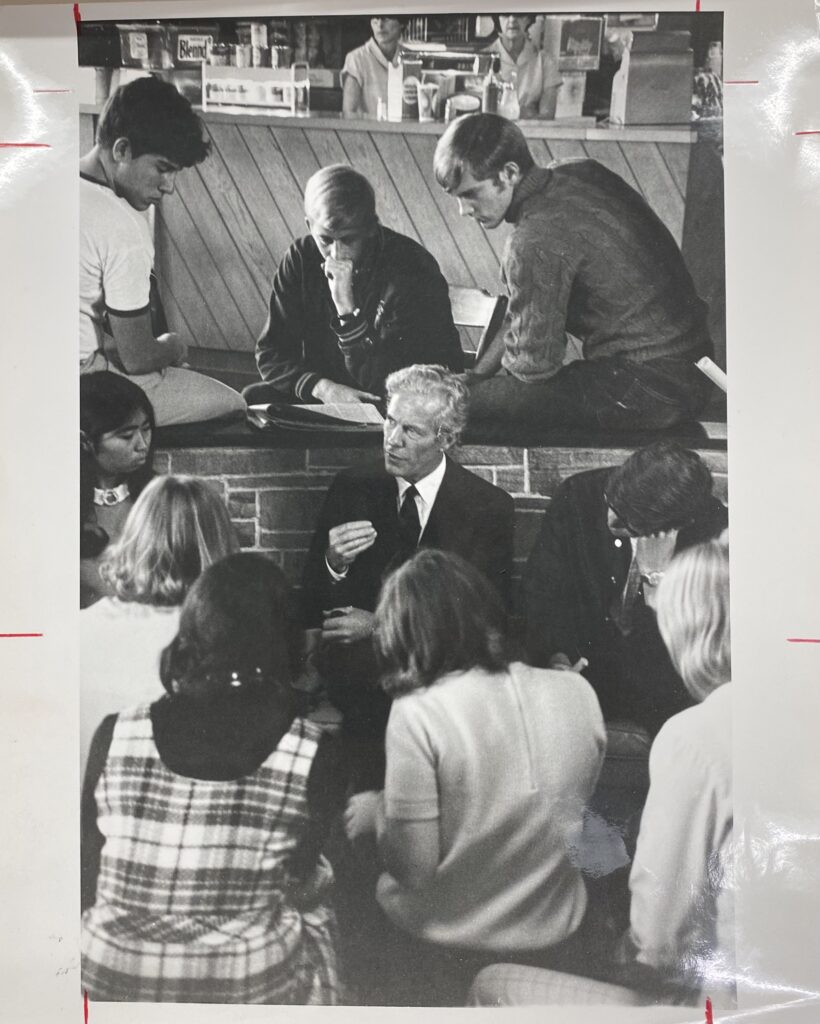
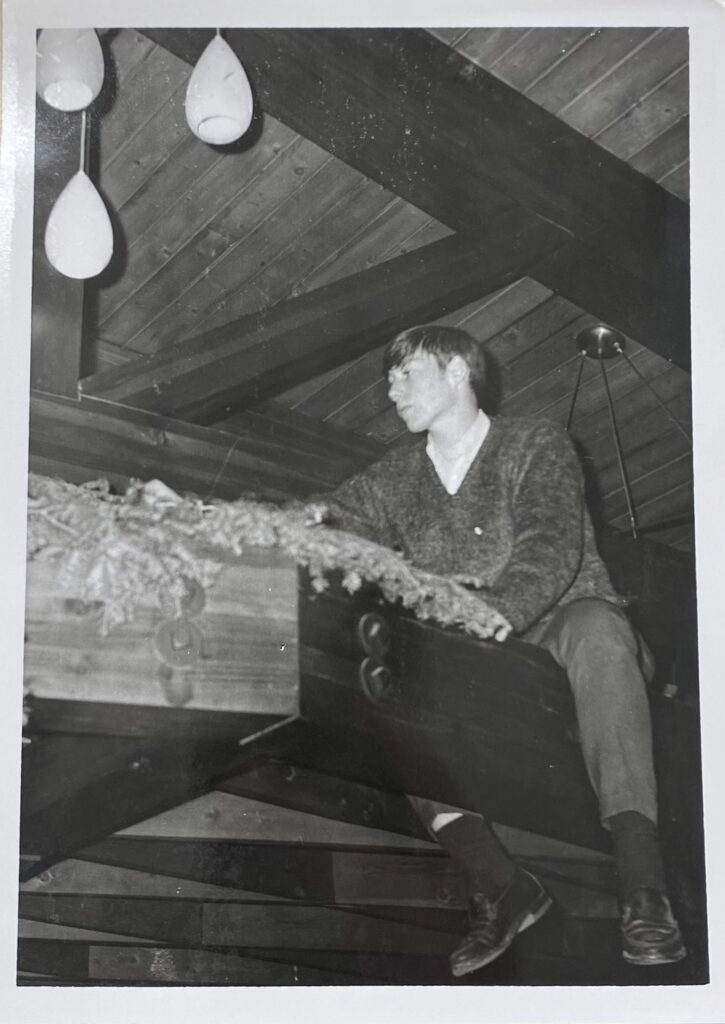
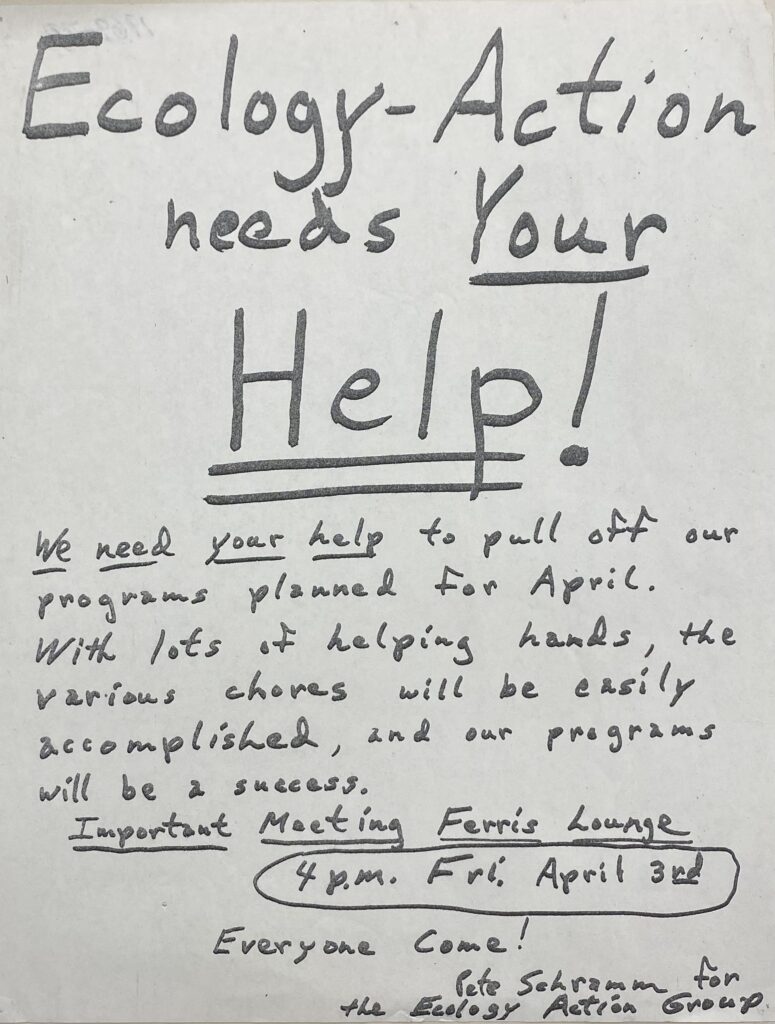
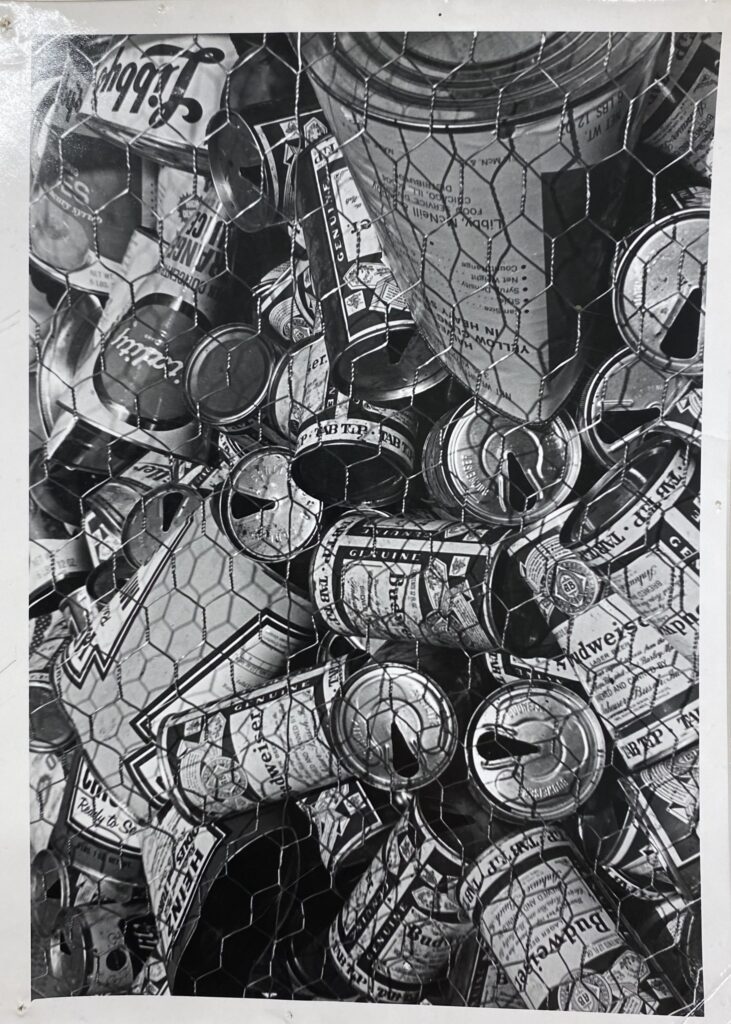
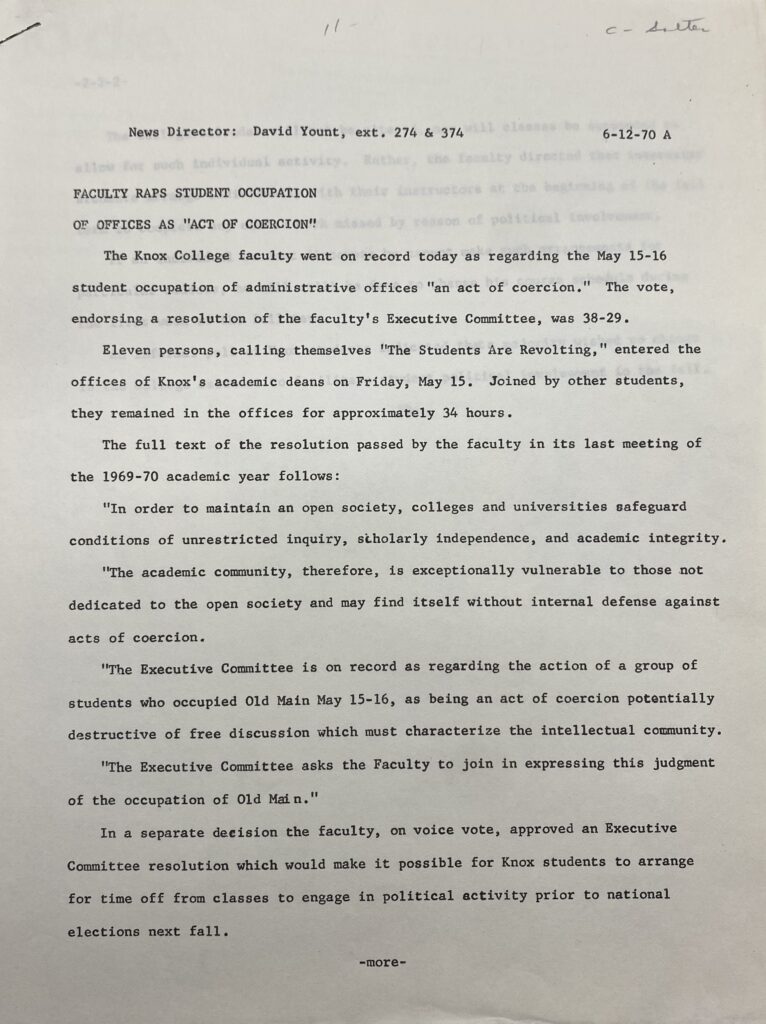
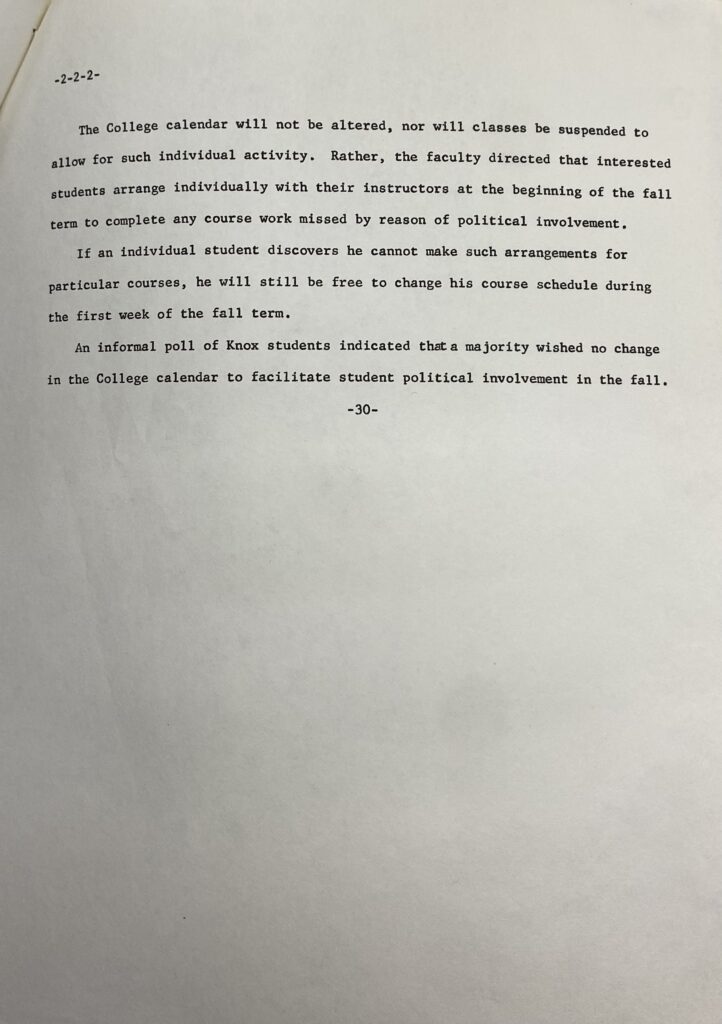
The last thing I found in the archives was from Pollution Week, set up by the Ecology club. There was a boom of activism about the climate in 1970 around America and on campus. I compare the hand-drawn posters and visual displays to the protests against the Vietnam War that also occurred on campus in 1970. Below is a new report about the takeover of the Dean’s office, which Knox officials called an “act of coercion” which seems a little hyperbolic to me. Knox students have always been activists, and they fought against a variety of issues both nationally and worldwide. We see the same drive for change within the A.B.L.E. house and within the Black Arts Movement. The supposed “act of coercion” that students participated in was a cut and dry sit-in, a protest against the federal government and America’s imperialism. As was Pollution Week and A.B.L.E.’s ten demands of Knox. But these things were more than just protests of America. They were protests of the norm, they were protests of the current authority. And even today we see students again protesting against the treatment of marginalized groups, against the imperialism of America and the genocide of Palestinians. In modern day we see students my age pushing back against the same generation of people who fought for the issues of their times. What these interlocking movements have in common is a push against what is established. And at the end of the day, that was what the Black Arts Movement was all about. About fighting against the established norms, against the feelings of hatred and bigotry and indifference. Apathy has no place in revolution. Apathy has no place anywhere. We should be inspired by the resounding echoes of the Civil Rights Movement, the Black Power Movement, and even the protests against the Vietnam War. We should be called to action by these movements, and by the students who carried the banner of freedom and revolution so many years before us.
Excellent work, Tyler. You’ve drawn together seemingly disparate campus events and found a through line that brings them all together–activism for progressive change. I also appreciate how you’ve found some humor among such heavy topics and realities.