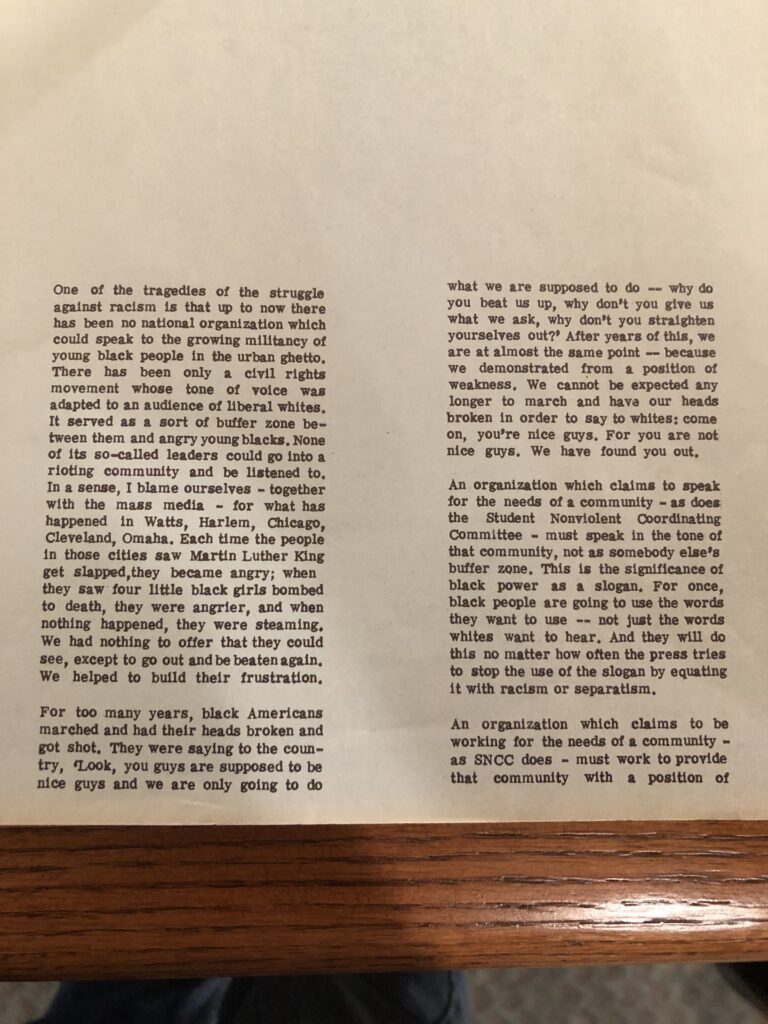
This is a small portion of a much larger statement submitted by SNCC, Student Non-violent Coordinating Community in 1966. It speaks of the frustration many Black Americans had during the time; the civil rights movement was not enough to address the pain and anger the black community felt. SNCC’s statement implies the civil rights movement was being palatable to whiteness, “There has only been a civil rights movement whose tone of voice was adapted to an audience of liberal whites. It served as a sort of buffer zone between them and angry young blacks.” It is no secret MLK attempted to maintain respectability during his leadership. He believed that if he had kept his composure and grace, he’d be listened to more than leaders such as Malcolm X or Fred Hampton. It is interesting how the author blames “ourselves.” The author believes they helped build the frustration of the black community by never offering anything concrete to help the movement except go out and get beaten time and time again because that was what they knew how to do, “we demonstrated from a position of weakness.” They believed if they got hurt enough times or if the abuse was televised enough times, it would finally convince those in power and white bystanders to stand up and do the right thing. Towards the end, the author says another thing that grabbed my attention, “This is the significance of black power as a slogan. For once, black people are going to use the words they want to use — not just the words whites want to hear.” That is exactly what the Black Arts Movement is about! It was about celebrating black power and pride without caring about the white audience.